CryoLetters Volume 47 - Issue 5
CryoLetters 47 (5), 310-339 (2026)
© CryoLetters, editor@cryoletters.org
doi.org/10.54680/fr26510110112
PERSPECTIVE: Cryopreservation of cell-populated bioengineered constructs - a roadmap for challenges, strategies, and translation
Vitalii Mutsenko1,2*, Oleksandr Gryshkov2, Lothar Lauterboeck2, Sara Leal Marin2, Natalia Trufanova1, Elias Anastassopoulos3, Lilia Kuleshova2, Birgit Glasmacher2 and Alexander Y. Petrenko1
- Institute for Problems of Cryobiology and Cryomedicine, National Academy of Sciences of Ukraine, Kharkiv, Ukraine.
- Institute for Multiphase Processes, Leibniz University Hannover, Garbsen, Germany.
- Department of Environmental Sciences, University of Thessaly, Larissa, Greece.
*Corresponding author’s E-mail: v.mutsenko@cryonas.org.ua
Abstract
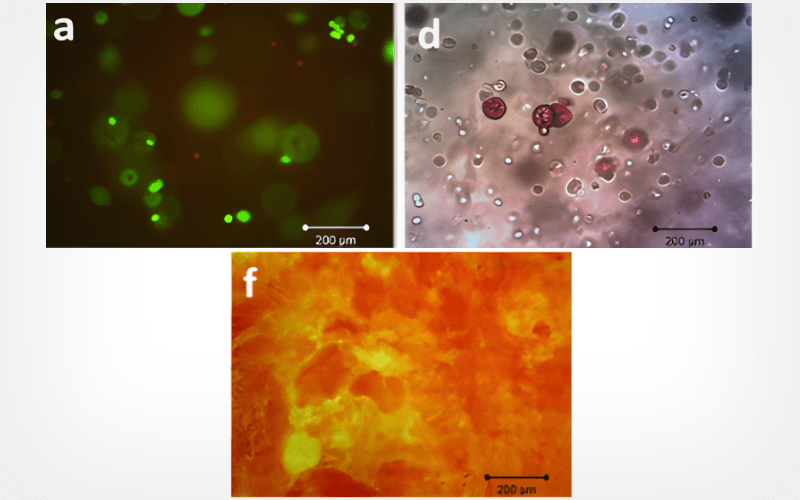
The advancement of cell-populated bioengineered constructs (BECs) has created an ever-increasing demand for effective cryopreservation strategies that guarantee long-term storage without compromising structural integrity or biological function. By allowing constructs to be stored until required, cryopreservation helps align tissue construct unrestricted availability with patient needs and enables regenerative treatments to be initiated on demand. Through the prism of biomaterial properties, this review delves into the historical development and recent progress in the in toto (whole cell-biomaterial construct) cryopreservation of engineered artificial tissues. Particular emphasis is placed on elastic fibrous matrices, alginate-based solid and core-shell constructs, and bulk 3D micro- and macroporous scaffolds, complemented by practical examples from the authors’ own research. Beyond these aspects, the review explores methods for recording freezing patterns within cell-free BECs to better characterize thermal events and establish reproducible frameworks with minimal construct-to-construct variability. Finally, this work surveys key regulatory considerations and translational barriers that must be overcome to achieve Good Manufacturing Practice (GMP)-compliant, clinically viable cryopreservation protocols for cell-populated BECs.
Keywords: bioengineered constructs; cell-populated scaffolds; cryobags; cryopreservable hydrogels; cryopreservation; infrared thermography; “in air” slow freezing; tissue engineering.
CryoLetters 47 (5), 340-347 (2026)
© CryoLetters, editor@cryoletters.org
doi.org/10.54680/fr26510110312
Optimization of open-pulled straw (OPS) vitrification for isolated zebrafish blastoderms: a foundation for whole-embryo cryopreservation
Ronghua Lu1, Bei Lü2, Yaqiang Chen3, Qihua Yi4, Qin Liu5 and Hua Shao1,5*
- Translational Medicine Research Center (TMRC), Chongqing University Three Gorges Hospital, Chongqing University, Chongqing, China.
- Department of Geriatric Psychiatry, Chongqing University Three Gorges Hospital, Chongqing University, Chongqing, China.
- Chongqing Three Gorges Vocational College, Chongqing, China.
- Department of Gynecology, Chongqing University Three Gorges Hospital, Chongqing University, Chongqing, China.
- Reproductive Medicine Center (RMC), Chongqing University Three Gorges Hospital, Chongqing University, Chongqing, China.
*Corresponding author’s E-mail: hshao@cqu.edu.cn
Abstract
Background
Fish embryo cryopreservation is hindered by low surface-to-volume ratios, poor membrane permeability, and yolk-mediated resistance to dehydration. The massive yolk prevents uniform cryoprotectant equilibration, leading to lethal toxicity during vitrification. These biological barriers lead to lethal ice formation and chilling injury, hindering long-term germplasm preservation in teleosts.
Objective
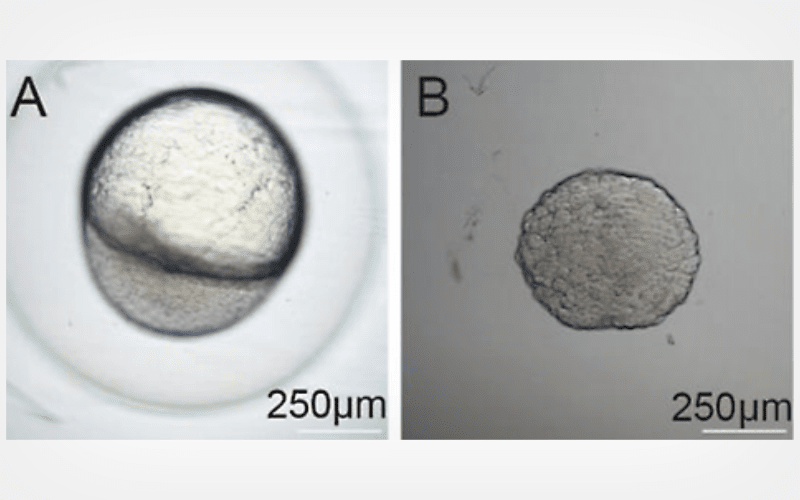
Teleost embryos consist primarily of the blastoderm and a massive yolk sac. Temporarily modulating the composition and volume of the yolk sac prior to cryopreservation may enhance its permeability to cryoprotectants (CPAs), potentially synchronizing the equilibration kinetics of the yolk with those of the blastoderm to improve overall embryonic cryotolerance. We first sought to identify the developmental stage at which zebrafish embryos become most suitable for cryopreservation and to establish an optimized vitrification protocol for isolated blastoderms at this stage. These efforts serve as a fundamental prerequisite for the ultimate goal of successfully cryopreserving intact embryos.
Materials and methods
Zebrafish blastoderms at various developmental stages were surgically isolated from the yolk sac. Vitrification was performed using the Open Pulled Straw (OPS) method, utilizing a combination of dimethyl sulfoxide (DMSO) and ethylene glycol (EG) as the primary cryoprotectants (CPAs).
Results
ptimized vitrification using an OPS-based DMSO/EG protocol yielded high viability. Following transplantation, vitrified–thawed RFP-labeled blastomeres successfully integrated into host embryos, demonstrating sustained developmental competence through the 21-somite stage.
Conclusion
OPS vitrification effectively preserves blastoderm developmental competence, providing a technical framework to bypass yolk-mediated barriers and establishing a vital foundation for achieving cryopreservation of intact teleost embryos.
Keywords: 1 k-cell stage; blastoderm; microinjection; vitrification; zebrafish (Danio rerio).
CryoLetters 47 (5), 348-357 (2026)
© CryoLetters, editor@cryoletters.org
doi.org/10.54680/fr26510110612
The effect of lactose, sucrose, and trehalose supplementation on dog sperm cryopreservation: cooling times, and adjustment of extender pH
Md. Ataur Rahman1,2#, Joonho Moon1#, Mohamed Abdou1,3 and Il-Jeoung Yu1*
- Laboratory of Theriogenology and Reproductive Biotechnology, College of Veterinary Medicine and Bio-safety Research Institute, Jeonbuk National University, Iksan 54596, Republic of Korea.
- Department of Surgery and Radiology, Bangabandhu Sheikh Mujibur Rahman Agricultural University, Gazipur 1706, Bangladesh.
- Department of Theriogenology, Faculty of Veterinary Medicine, Assiut University, Assiut, Egypt.
*Corresponding author’s E-mail: iyu@jbnu.ac.kr
#Contributed equally as first authors
Abstract
Background
Glycerol toxicity in semen extenders necessitates the development of glycerol-free alternatives for canine sperm cryopreservation.
Objective
We evaluated the effects of disaccharides at different concentrations, cooling time, and extender pH adjustment before freezing and post-thaw incubation on sperm parameters and gene expression.
Materials and methods
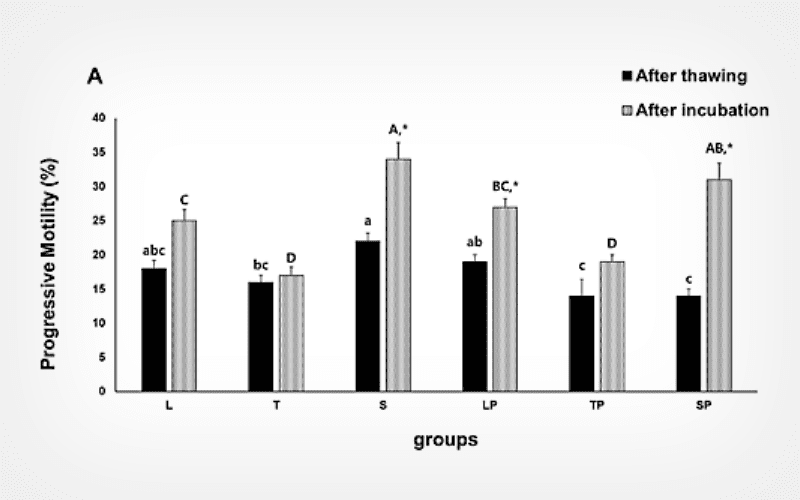
Spermatozoa were processed using glycerol-free Tris (GFT) supplemented with 50–200 mM disaccharides in Experiment 1 (E1). In Experiments 2 (E2) and 3 (E3), 100 mM lactose (L), trehalose (T), or sucrose (S) was used. Additionally, pH-adjusted forms of lactose (LP), trehalose (TP), and sucrose (SP) were used in E3. Samples were equilibrated at 4°C for varying times, frozen in LN2 vapour, and stored in LN2. Post-thaw progressive motility and viability were assessed. ROS, mitochondrial membrane potential MMP (JC-1/PI), and sperm mitochondrial cysteine-rich protein (SMCP) gene expression were analyzed in E3.
Results
In E1, 100 mM enhanced progressive motility across all disaccharides (P<0.05). In E2, optimal cooling times improved motility (50–70 min for trehalose, 50 min for sucrose) and viability (30–50 min for sucrose). In E3, pH adjustment (6.85) of the extender improved motility in S, LP, and SP after 30 min post-thaw incubation at 24°C (P<0.05). Additionally, S increased live sperm with high MMP, while LP and SP increased LLMMP, with no effect on SMCP gene expression.
Conclusion
Cryopreservation using GFT supplemented with 100 mM sucrose, 50 min cooling at 4°C, and 30 min post-thaw incubation at 24°C improved sperm motility, viability, and mitochondrial potential.
Keywords: disaccharides; dog sperm cryopreservation; gene expression; glycerol-free Tris; post-thaw incubation time.
CryoLetters 47 (5), 358-371 (2026)
© CryoLetters, editor@cryoletters.org
doi.org/10.54680/fr26510110712
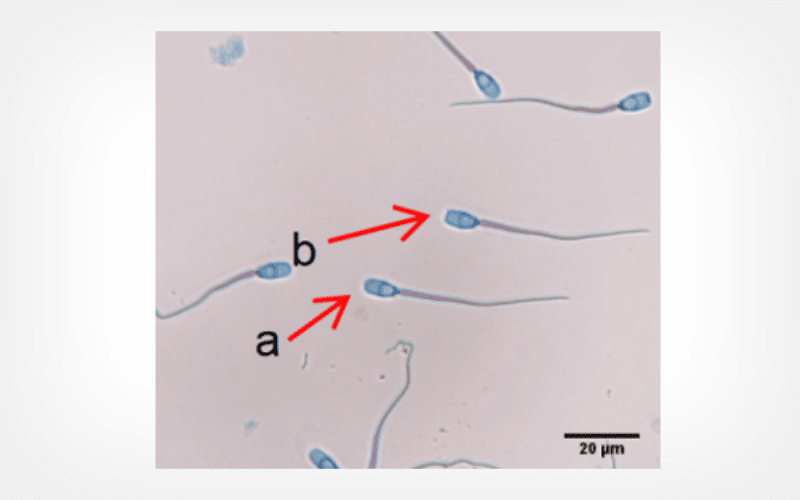
Crocin enhances the quality of frozen-thawed boar sperm by modulating oxidative stress and glycerophospholipid metabolism
HaoNan Chen1#, YuXin Zhang1#, ChunRong Xu2, Cheng Qin1, XingXing Song1, Juan Liu1, XiaoJie Qin2, DeYu Liu2, XiaYun Peng3*, ChangLong X4* and Chuan-Huo Hu1*
- College of Animal Science and Technology, Guangxi Key Laboratory of Animal Breeding, Disease Control and Prevention, Guangxi University, Nanning 530004, China.
- Guangxi Work Station of Livestock & Poultry Breed Improvement, Nanning, 530001, China.
- Animal Husbandry Research Institute, Guangxi Vocational University of Agriculture, Nanning 530001, China.
- The Reproductive Medical Center, Nanning Second People's Hospital, Nanning, China.
*Corresponding authors’ E-mail: PX15978171189@163.com (X.P.), xuchanglong2011@hotmail.com (C.X.) and hch64815@gxu.edu.cn (C.H.)
#Contributed equally as first authors
Abstract
Background
Cryopreservation is a fundamental tool for conserving endangered species and enhancing reproductive management in livestock; however, post-thaw sperm performance is easily influenced by several stressors. Crocin, a natural carotenoid, has antioxidant properties. However, its effects on frozen-thawed boar sperm remain insufficiently studied.
Objective
This study aimed to assess the role of crocin in improving the quality of frozen boar sperm by focusing on its mechanisms of regulating oxidative stress, mitochondrial membrane potential, and glycerophospholipid metabolism.
Materials and methods
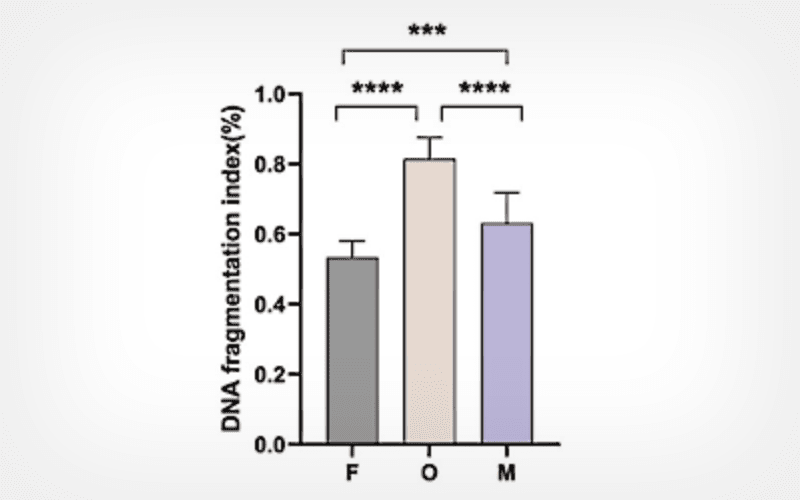
Boar sperm samples were supplemented with varying crocin concentrations (0, 0.5, 1, and 2 mM). Sperm kinematic parameters and motility were assessed using computer-assisted semen analysis, whereas the DNA fragmentation index and mitochondrial membrane potential were assessed using a fluorescence microscope.
Results
Treatment with 1 mM crocin significantly enhanced the kinematic parameters (P < 0.05) and frozen sperm viability (P < 0.05) while enhancing the integrity of the plasma- and acrosomal membranes (P < 0.05). The oxidative stress indices, including reactive oxygen species, 8-hydroxy-2-deoxyguanosine, and malondialdehyde content (P < 0.01), were effectively lowered by crocin. Furthermore, crocin enhanced the mitochondrial membrane potential and sperm DNA integrity (P < 0.01). Metabolomic analysis showed that crocin affected several differential metabolites, including phosphatidylcholine, phosphatidylethanolamine, phosphatidylglycerol, and 2-lysophosphatidylcholine (P < 0.05), highlighting its role in glycerophospholipid metabolism.
Conclusion
Crocin markedly improved the quality of frozen boar sperm by regulating oxidative stress and lipid metabolism, offering new insights for optimising sperm cryopreservation. This study provides practical insights into the optimisation of boar semen cryopreservation in livestock breeding.
Keywords: crocin; cryopreservation; glyceryl phospholipids; malondialdehyde; natural antioxidant.
CryoLetters 47 (5), 372=382 (2026)
© CryoLetters, editor@cryoletters.org
doi.org/10.54680/fr26510110212
Effects of berberine supplementation on the post-thaw quality of boar semen
Meng Zhou1# , Ziang Gao1#, Shouqian Sang1, Yu Gao1, Qianqian Hu1,2,3, Jing Li1,2,3
and Chongmei Ruan1,2,3*
- College of Animal Science, Anhui Science and Technology University, Chuzhou, 233100, China.
- Anhui Province Key Laboratory of Animal Nutrition Regulation and Health, Chuzhou, 233100, China.
- Anhui Engineering Technology Research Center of Pork Quality Control and Enhance, Chuzhou 233100, China.
*Corresponding author’s E-mail: hruanchm@ahstu.edu.cn
#Contributed equally as first authors
Abstract
Background
Berberine (BBR) is known for its strong free radical-scavenging and antioxidant activities and may alleviate oxidative stress-induced damage during semen cryopreservation.
Objective
This study aims to evaluate the impact of BBR supplementation in the freezing extender on the cryopreservation quality of boar semen.
Materials and methods
BBR was incorporated into the freezing extender at concentrations of 0 (control), 5, 10, and 20 μmol/L. Frozen semen straws were prepared following a standard protocol. Post-thaw, assessments were conducted on sperm viability, motility, motility parameters, acrosome integrity, plasma membrane integrity, antioxidant capacity, reactive oxygen species (ROS) levels, and mitochondrial membrane potential (MMP).
Results
The 10 μmol/L BBR-treated group exhibited significantly higher sperm viability, motility, and velocity parameters, including straight-line velocity (VSL), curvilinear velocity (VCL), and average path velocity (VAP), compared to the control group (P < 0.05). Additionally, acrosome integrity and plasma membrane integrity were significantly enhanced in the 10 μmol/L BBR-treated group relative to the control group (P < 0.05). Furthermore, the group treated with 10 μmol/L BBR exhibited a significant reduction in malondialdehyde (MDA) content and ROS levels, while demonstrating the highest superoxide dismutase (SOD) activity, total antioxidant capacity (T-AOC), and MMP (P < 0.05).
Conclusion
The addition of BBR to the freezing extender enhanced the post-thaw quality of boar sperm, with the 10 μmol/L concentration providing the most effective protective benefits among the concentrations evaluated.
Keywords: berberine; boar semen cryopreservation; frozen–thawed sperm; oxidative stress.